A wabi-sabi interior spa is one of the most misunderstood concepts in contemporary wellness design. The term has entered mainstream design vocabulary — which means it has also been diluted, misapplied, and reduced to a mood board aesthetic that captures the surface of Japanese philosophy without the substance.
This article is for spa owners who want to understand what wabi-sabi interior design actually does — not how it looks, but what it produces in the bodies of the guests who enter a space designed with genuine philosophical intention.
The Difference Between Wabi-Sabi Aesthetics and Wabi-Sabi Philosophy
A wabi-sabi aesthetic spa uses certain visual elements: natural materials, neutral tones, minimal clutter, perhaps some Japanese-influenced furniture or art. These elements can be beautiful. They can create a pleasant environment. However, they do not, on their own, produce what an authentic wabi-sabi interior spa produces.
A wabi-sabi philosophy spa is designed around a specific question: what does this space communicate to the nervous system of the person who enters it?
That question changes everything about the design process. Suddenly, the choice between two natural stone finishes is not an aesthetic question — it is a physiological one. Does the visible grain of this stone communicate honesty and naturalness? Or does the polish communicate that the stone has been made to perform rather than simply to be?
The nervous system reads these signals before the conscious mind forms an opinion. According to Psychology Today, the human brain processes environmental stimuli and begins generating an emotional and physiological response within milliseconds of entering a space.
By the time a guest forms the thought “this is beautiful,” their body has already registered whether the space feels safe, honest, and restful — or whether it feels like performance.
The Five Elements of an Authentic Wabi-Sabi Interior Spa
Natural materials with visible character.
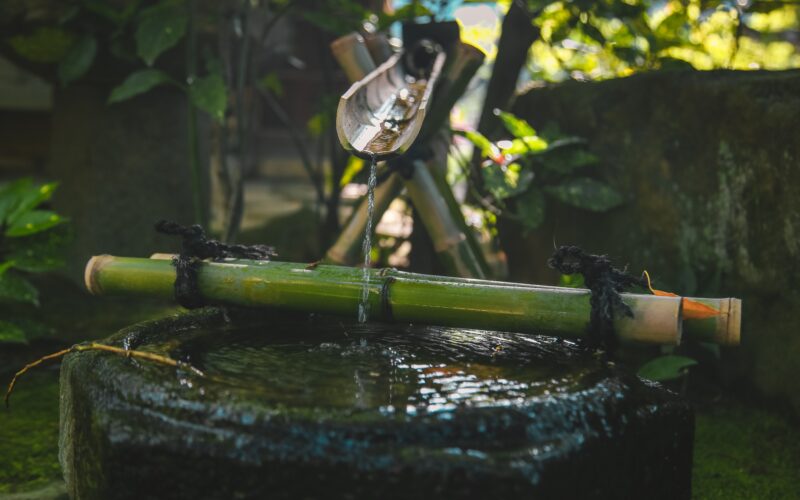
A wabi-sabi interior spa chooses materials that tell the truth about what they are. Cedar with visible grain. Linen that wrinkles naturally. Clay walls with slight textural variation. River stones with their natural surface intact. These materials communicate honesty — and the nervous system reads honesty as safe.
Deliberate asymmetry.
Most Western interior design uses symmetry to communicate order and control. Wabi-sabi deliberately disrupts this. A single lamp off-center. Three objects arranged where two or four would feel more balanced. Space that is intentionally uneven. Asymmetry creates movement. It produces the feeling of something alive rather than arranged. The eye can rest without being directed.
Controlled shadow.
Most spa interiors focus on light — maximizing it, softening it, directing it. A wabi-sabi interior spa is equally interested in shadow. Shadow is not the absence of light. In traditional Japanese aesthetics, it is an element in its own right. A treatment room with genuine areas of darkness — not manufactured by dimmer switches, but created by the architecture itself — gives the room depth. The lit areas feel warmer against that contrast.
Transience made visible.
Wabi-sabi honors impermanence. A seasonal flower arrangement that will change. A candle that burns down. Incense that disperses into the air and disappears. These elements are not decorative choices. They are philosophical statements — reminding the guest that this moment is sufficient, and that nothing here is trying to last forever. Guests who encounter this kind of transience in a space often describe a specific feeling of release that precedes the treatment itself.
Intentional emptiness.
A wabi-sabi interior spa uses empty space as an active element — not as a sign that the design budget ran out, but as a deliberate choice. The concept of ma — the meaningful use of empty space — shapes where objects are placed and, equally importantly, where nothing is placed. An empty wall that allows the eye to rest. A low surface with nothing on it. These absences are as designed as everything else in the space.
What This Produces in Practice
A spa designed with these principles produces a guest experience that begins before the treatment — in the quality of stillness that the space itself generates.
Guests who enter an authentic wabi-sabi interior spa describe a specific sequence of responses: an initial sense of unfamiliarity — because the space does not perform luxury in the expected way — followed by a gradual settling. The eye finds places to rest. The mind slows. The body begins to downshift.
By the time the treatment begins, the nervous system has already started the process of parasympathetic activation. The therapist’s work starts from a different baseline. The depth of rest achievable in the treatment is correspondingly greater.
This is the clinical logic behind the philosophy. And it is why spa owners who invest in genuine wabi-sabi interior design — rather than Japanese-aesthetic design — consistently report a different quality of guest response than those who have invested in beautiful but philosophically neutral environments.
A Practical Starting Point
For spa owners considering how to apply these principles, begin with one question rather than a design overhaul. Walk through your existing space and ask: what here is performing rather than being?
A surface that hides what it is made of. A symmetrical arrangement that communicates control rather than ease. A room where every visual moment is filled and the eye has nowhere to simply rest.
These are the starting points for a wabi-sabi interior spa conversation. For the philosophical framework that connects interior design to treatment outcome, the broader picture of authentic Japanese wellness is worth understanding in full.
Okawari transfers the complete system of authentic Japanese wellness — including the design philosophy behind its treatment environments — to international spa owners and investors. Visit okawarispa.com/enquire.