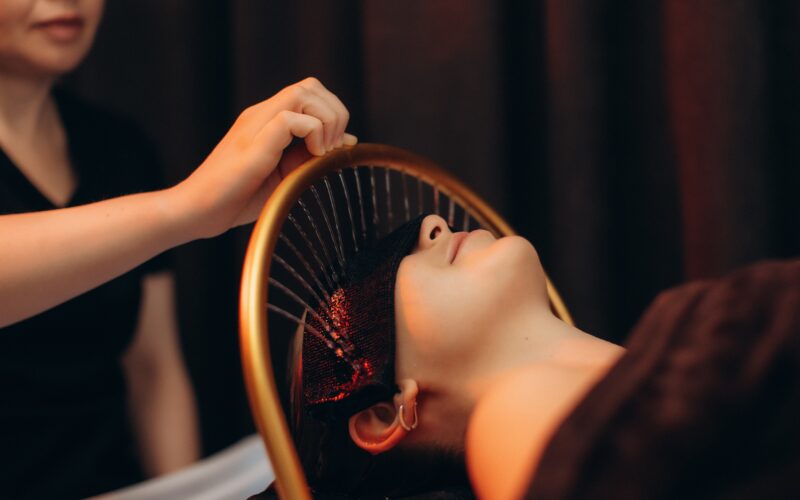
Japanese therapist training begins in a place that most international training programs never reach: the practitioner’s own internal state.
Before a hand is placed or a technique introduced, a therapist in authentic Japanese wellness training must first develop kokoro — before any protocol is discussed. The quality of internal stillness. The ability to enter a treatment room genuinely centered rather than simply professionally composed.
This starting point is not philosophical decoration. It is the foundation on which everything else is built — and it is the primary reason why therapists trained in this tradition produce outcomes that therapists trained in technique alone cannot replicate.
The Fundamental Difference in Japanese Therapist Training
Standard spa training programs share a common starting assumption: that the most important thing a therapist can develop is technical skill. The training sequences follow from this assumption — technique first, anatomy second, client communication third. Philosophy, if it appears at all, is contextual background.
Japanese therapist training inverts this sequence deliberately. The understanding of why comes before the learning of how. The internal development of the practitioner precedes the external development of the technique.
This inversion produces a different kind of therapist. Not necessarily more technically skilled — though the anatomy-based approach of genuine Japanese training often produces strong technical depth as well. Different in the quality of presence they bring to the treatment room, and in what that presence communicates to the guest’s nervous system.
According to Psychology Today, the therapeutic relationship — the quality of connection between practitioner and client — is among the strongest predictors of outcome across body-based therapies. Japanese therapist training is structured around developing this relationship quality as its primary objective.
What Japanese Therapist Training Actually Covers
The Internal Practice
The first element of authentic japanese therapist training is the development of kokoro — the practitioner’s own internal quality. This is not taught through instruction alone. It develops through practice, through the cultivation of genuine stillness, through learning to enter a room without bringing the outside world with you.
Meditation, breath awareness, and specific attention practices are not peripheral to japanese therapist training. They are central. A therapist who has not developed their own relationship with stillness cannot transmit it to a guest.
Anatomy as Foundation
Authentic japanese therapist training integrates Western anatomical knowledge with Eastern wellness philosophy. Understanding the parasympathetic nervous system, the role of fascia in holding chronic tension, the specific ways that touch frequency and pressure affect neurological response — these give the therapist a rational basis for every clinical decision.
Research published by the National Institutes of Health supports the physiological mechanisms that Japanese bodywork has understood empirically for centuries. A therapist trained in this anatomy can explain why the work produces the results it does. More importantly, this understanding allows them to adapt — to read what a specific body needs rather than applying a fixed protocol regardless of who is on the table.
The Four Pillars in Practice
A japanese therapist training program built on authentic principles teaches the four pillars — kokoro, waza, ma, and michi — not as concepts but as practices.
Kokoro develops through the practitioner’s own internal work. Waza develops as the expression of kokoro through skilled hands. Ma develops as the practitioner learns to use pause and silence as treatment elements rather than voids to fill. Michi establishes that the training does not end at certification — that genuine japanese therapist training is the beginning of an ongoing path of development.
Why This Produces Different Outcomes
The practical effect of japanese therapist training built on these principles is visible in what guests experience. Not “that was a good treatment” — but the specific language of genuine neurological shift: reset, different, something changed.
This language reflects a physiological reality. A therapist who brings genuine kokoro to the room communicates safety through their presence before the hands begin. The guest’s nervous system responds to the quality of that presence — downshifting from the low-level sympathetic activation of daily life toward the genuine parasympathetic dominance that authentic healing requires.
Standard training produces therapists who execute correctly. Japanese therapist training produces therapists whose work changes how guests feel for days afterward — and who build the kind of loyalty that drives a spa business from pleasant to irreplaceable.
For spa owners who want to understand what a japanese therapist training program that develops this depth looks like in practice, the Okawari curriculum and the broader picture of authentic Japanese wellness are worth understanding before any training decisions are made.
CEOL Academy Japan® developed Okawari in Osaka — an anatomy-based institution that has trained 3,000+ therapists across Japan. We transfer this japanese therapist training approach to international partners. Visit okawarispa.com/enquire.