The singapore wellness market 2026 looks impressive on paper. Consistent growth. High consumer spending. A government actively promoting wellness tourism as part of the broader hospitality strategy. International brands entering. Local concepts expanding.
Look closer, and a more specific picture emerges. The growth is not evenly distributed. The operators who are winning at the premium end share something that most entrants into the Singapore market do not have. And the gap between what exists and what premium Singapore consumers are actually looking for has never been more visible.
What the Singapore Wellness Market in 2026 Actually Looks Like
Singapore’s wellness consumer base is among the most sophisticated in Asia. The city’s combination of high disposable income, frequent international travel, and genuine cultural openness to wellness investment has created a market that is, by any measure, premium-ready.
According to Statista, Singapore’s health and wellness market has maintained consistent upward growth, with the premium segment outperforming broader market trends. The guests driving this growth are experienced. They have visited wellness destinations across Asia, Europe, and the United States. They have strong reference points for quality.
However, sophistication creates a specific challenge for new entrants. A guest who has experienced excellent spa programs in Bali, Tokyo, Seoul, and London will not find anything impressive in something that resembles what they have already tried. They are looking for something genuinely different — and finding very little of it in the Singapore market currently.
Where the Opportunity Is
The opportunity in the singapore wellness market 2026 is not in the mid-market. That segment is increasingly competitive, margin-compressed, and loyalty-thin. Guests there return when it is convenient and leave when a better offer appears nearby.
The opportunity is at the top — specifically, in the gap between what premium Singapore wellness consumers have experienced and what authentic Japanese wellness can deliver.
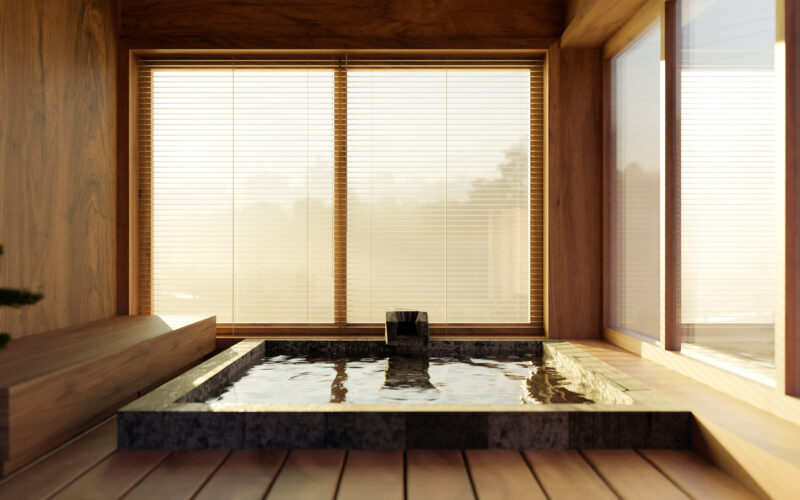
Most Japanese-branded spa concepts in Singapore deliver the aesthetic of Japan. Natural materials. Minimalist design. A menu with Japanese-named treatments. These are not wrong choices — but competitors replicate them widely, and they do not produce the physiological outcome that creates genuine loyalty.
Authentic Japanese wellness — built with proper philosophy, sound design, environmental principles, and training depth — produces a result that most Singapore guests have never experienced. Their sleep changes after a treatment. Stress no longer lands the same way. The body asks to return.
According to McKinsey & Company, this kind of outcome-driven loyalty is what separates sustainable premium wellness businesses from ones that depend on constant acquisition.
The first operator in the Singapore market to build the real thing — not the aesthetic, but the system — will own a position that competitors will spend years attempting to replicate.
Where the Opportunity Is Not
It is worth being equally specific about where the Singapore wellness market in 2026 does not reward investment.
The mid-market is saturated. There are more than enough competent spas in Singapore offering standard luxury treatments at reasonable prices. Entering this segment requires competing on price, location, and promotion — none of which builds genuine loyalty.
Japanese-aesthetic without Japanese substance is already crowded. Operators across Singapore have widely adopted the visual elements of Japanese wellness design.
Hinoki wood, neutral tones, Japanese-named treatments — these are no longer differentiators. They are table stakes that any well-funded operator can replicate in six months.
Technology-led wellness is a short differentiation window. LED therapy, cryotherapy, specialized equipment — these generate press coverage and initial curiosity. Within 18 months of any modality gaining mainstream attention, it appears in most premium Singapore spas. Technology differentiates for a season, not a decade.
What Singapore Premium Consumers Are Actually Looking For
The pattern that emerges from conversations with premium Singapore wellness consumers is consistent. They are not looking for more beautiful. Technology no longer impresses them either.What they want is an experience their body has not had before — one that produces a genuinely different result.
The language they use when they find it is specific. Not “that was relaxing.” Reset. Different. Something changed. This language reflects a genuine physiological experience — a nervous system that reached a depth of rest it does not normally access.
This is what authentic Japanese wellness delivers when it is built correctly. And it is what the singapore wellness market 2026 is missing at scale.
The Practical Implication for Investors
For investors evaluating the Singapore wellness market in 2026, the most important question is therefore not “what is the market size?” It is, instead, “where is the genuine gap?”
The genuine gap is between what premium Singapore consumers have experienced and what authentic Japanese wellness can produce. Filling that gap requires a training partnership that transfers philosophy and system — not just aesthetic and technique.
The operators who make that investment now will be the ones whose guests say, three years from now, that they found something in Singapore they have not been able to find anywhere else.
For investors ready to have that conversation, the Okawari partnership model was designed specifically for this market.
Okawari is a Japanese luxury wellness concept developed by CEOL Academy Japan®, Osaka. Partnership enquiries from Singapore spa owners, hotel operators, and hospitality investors are welcome. Visit okawarispa.com/enquire.