Silence in Japanese healing is not what most people imagine when they hear the word “silence.”Silence in Japanese healing is not the absence of sound. Nor is it awkwardness managed through white noise. It is not the quiet that descends when the music stops and everyone waits for it to start again.
This silence is active. Held with intention, it communicates something specific to the nervous system of the person receiving it — something that words, however warm and skilled, cannot communicate in the same way. It says: this moment is complete. Nothing more is required of you.
Most spas cannot deliver this. Not because their staff are unskilled or their environments are poorly designed. But because the industry has trained operators to treat silence as a problem to be managed rather than a resource to be used.
Why Silence Is Therapeutic
The therapeutic mechanism of silence in Japanese healing runs through the autonomic nervous system. Specifically, through the parasympathetic branch — the part responsible for rest, recovery, and cellular repair.
The parasympathetic nervous system engages fully when the body registers that nothing is required of it. No social demands. Nothing to respond to, process, or engage with. No ambient stimulation that requires monitoring. Genuine silence — specifically, the silence of a space where nothing is expected — creates these conditions more efficiently than any other environmental factor.
Most urban environments, including most spa environments, never reach this quality of silence. There is always something to process. Music that the auditory system monitors, even at low volume. Voices in adjacent rooms. The ambient hum of ventilation systems. The faint suggestion that the next thing will begin soon.
According to research referenced by Healthline, brief periods of genuine silence produce measurable parasympathetic activation — reductions in blood pressure, cortisol, and heart rate — that continuous ambient sound environments do not produce regardless of how pleasant the sound is.
What Silence in Japanese Healing Actually Looks Like
Silence in Japanese healing is not the absence of everything. It is the deliberate construction of a specific quality of acoustic space — one that the nervous system reads as safe, held, and unhurried.
This silence has several characteristics. It is comfortable — not the silence of something having gone wrong, but the silence of something being completely right. It is consistent — not interrupted by sudden sounds that re-engage the alerting response. And it is held by the practitioner as much as by the environment. A therapist who is genuinely comfortable with silence communicates this through their presence. A therapist who is internally uncomfortable with silence communicates that too — and the guest’s nervous system registers the difference.
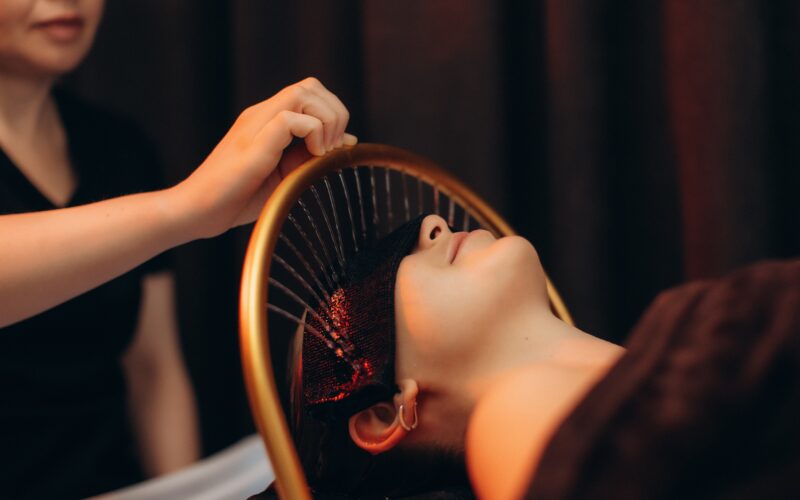
In practice, silence in Japanese healing appears at specific points in the treatment sequence. The transition from reception to treatment room. The preparation ritual before the treatment begins. The pauses between movements — the ma that gives each technique room to resolve in the body before the next begins. The integration period at the end of the treatment, when the guest is held in stillness before being brought back to the room.
Each of these silences serves a specific therapeutic purpose. Together, they create a treatment experience that is different in kind — not just in quality — from a treatment delivered in continuous sound.
Why Most Spas Are Too Loud
The reasons most spas fill their acoustic space are understandable. Staff are trained to be warm and communicative. Management worries that silence will make guests feel ignored or abandoned. Music selection is given considerable attention as a brand expression tool. The assumption — rarely questioned — is that guests want stimulation, not stillness.
This assumption is wrong for the premium wellness guest. Not all guests — but the ones who return most loyally and refer most consistently. These guests are, in most cases, overstimulated in their daily lives. Their nervous systems are managing continuous demands. What they are actually looking for in a spa experience is not better stimulation. It is genuine release from stimulation.
When a practitioner who understands silence in Japanese healing holds a treatment room in the specific quality of stillness that the tradition requires, this is what premium guests feel. Not emptiness. Not awkwardness. Something close to relief.
Building a Culture of Silence
For spa owners who want to incorporate silence in Japanese healing into their practice, the starting point is not a policy memo. It is a training conversation with your therapists.
Ask them: how do they feel when a treatment room goes quiet? Do they experience the impulse to fill the silence? When a guest goes quiet, do they hold the space or manage it?
Their answers will tell you where the work needs to begin. Developing genuine comfort with silence — the kind that communicates safety rather than absence — is a training outcome, not a personality trait. It develops through practice, reflection, and the philosophical understanding of why silence matters.
For the full context of how silence connects to the broader framework of authentic Japanese wellness, and how it relates to the concept of noble silence in wellness practice, the complete picture is worth understanding.
Okawari builds training programs that develop the practitioner’s relationship to silence as a therapeutic tool. To learn how this translates to a complete japanese wellness system, visit okawarispa.com/enquire.