There is a word in Japanese with no direct English equivalent. Ma. Most translations offer “negative space” or “emptiness” — but both miss something essential. Negative space implies absence. The japanese ma concept in spa design implies presence. It is not the gap where something is missing. It is the space where something necessary lives.
This is one of the most misunderstood principles in wellness design. Most Western spa designers fill space — with furniture, plants, artwork, carefully chosen objects that signal luxury and care. The instinct is understandable. Empty space can feel unfinished, or worse, like the operator ran out of budget.
But ma is not emptiness for lack of anything better. It is emptiness by choice — held with intention, designed with precision, and understood to be as therapeutic as anything in the treatment room.
What the Japanese Ma Concept Actually Means
The concept of ma appears across virtually every traditional Japanese art form. In music, ma is the pause between notes. The silence gives the preceding note room to resolve. It gives the following note significance. Remove the ma from traditional Japanese music and you do not get the same music faster. You get something unrecognizable.
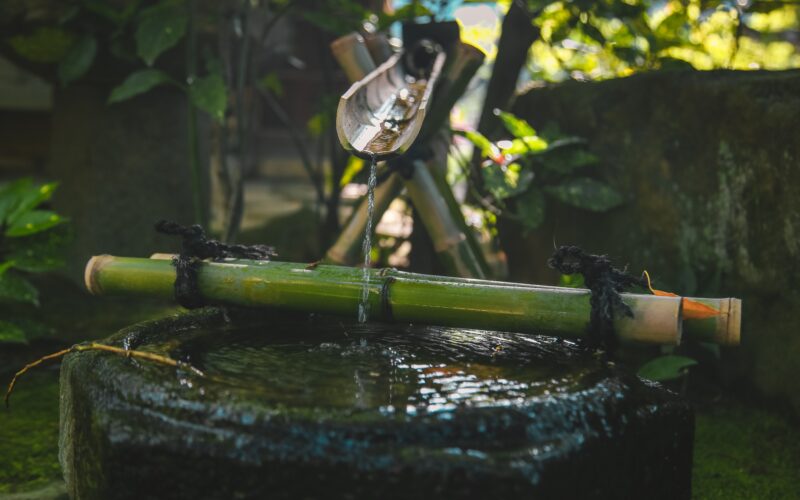
In architecture, ma is the space between structures. The garden between buildings. The gap between the shoji screen and the wall. The distance between one stone in a path and the next. These spaces are not accidental. They are calculated. They create a rhythm of approach and arrival that shapes how a person moves through a space.
In human interaction, ma is the pause in conversation. The moment after something meaningful is said when neither person speaks. Japanese communication uses this pause deliberately. It is not awkwardness. It is respect — for the weight of what was just said, and for the person receiving it.
In wellness, the japanese ma concept translates to intentional pause, gap, and stillness throughout the entire guest experience. According to Psychology Today, intentional pauses in sensory experience allow the nervous system to process stimulation more fully. Japanese wellness practitioners have understood this intuitively for centuries. The science now confirms it.
The Japanese Ma Concept Spa in Physical Space
Walk into a spa designed with ma in mind, and the first thing you notice is what is not there.
Fewer objects than expected. The ones present feel deliberate. A single branch in a narrow vase. A low table with nothing on it. A window that frames a view of nothing in particular — a wall, a garden corner, the light changing on a stone surface.
This emptiness is active. It asks you to look. It invites attention toward something without demanding it. In doing so, it slows the rate at which your mind generates new things to attend to. That slowing is, in practical terms, what rest requires.
Most spa environments do the opposite. They fill visual space to communicate value — to show the guest that care has been taken, that quality is present. This is reasonable. However, it works against the physiological goal of a wellness treatment.
A space that fills every visual moment keeps the brain in a low level of active engagement. The eye moves, the mind follows, and the nervous system never fully downshifts. A space that uses the japanese ma concept spa allows the eye to rest. The mind follows. The conditions for deeper physiological change become possible.
Ma in Treatment Sequencing
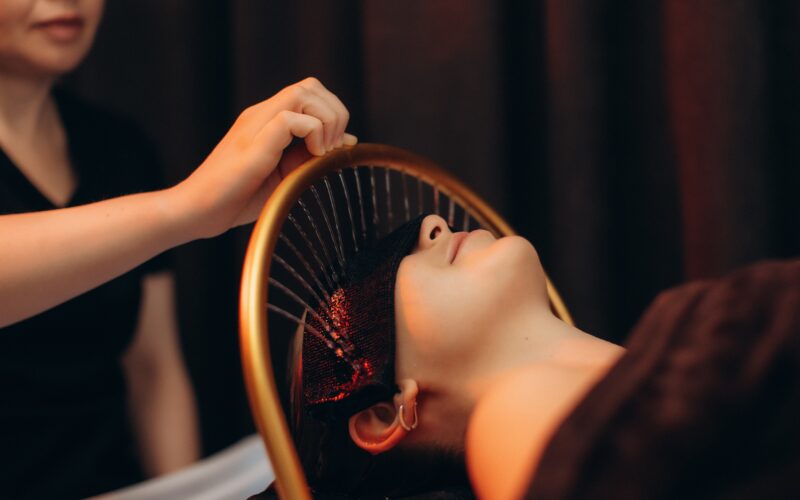
The most direct application of ma in a Japanese spa treatment is in the pauses between movements.
Most massage and bodywork training focuses on continuity. Therapists learn to maintain contact, move fluidly, avoid gaps that might feel like inattention. This is not wrong as a general principle. However, it is incomplete when applied to Japanese wellness.
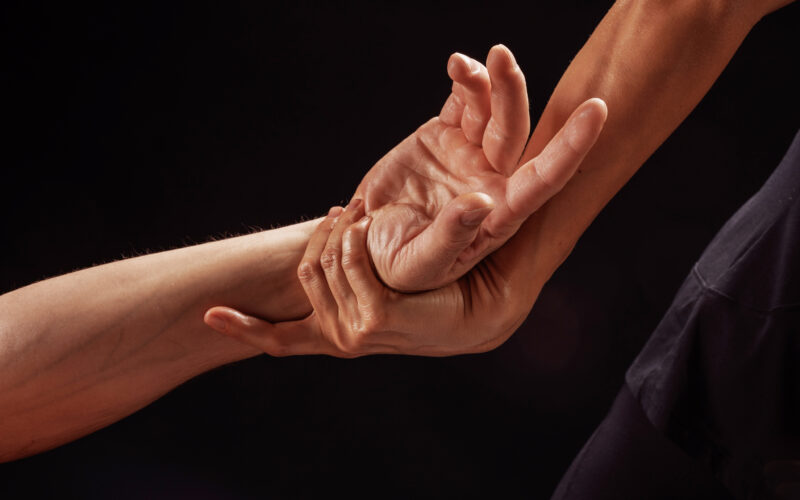
In Japanese bodywork, the pause between movements is a treatment element — not a transition. When a therapist completes a movement and pauses — hands resting, pressure maintained but motion stopped — the body registers what it just received. The nervous system processes the input. The tissue responds. The breath changes.
This is the japanese ma concept in its therapeutic form. The pause is not rest for the therapist. It is work for the guest’s body. And the quality of that pause — the practitioner’s ability to hold stillness without communicating urgency — takes considerable training to develop.
Ma in Sound Design
Sound ma is perhaps the most counterintuitive application of the concept for Western audiences. Western musical traditions tend to treat silence as something to fill rather than something to hold.
In Japanese music, the silence between sounds is as carefully constructed as the sounds themselves. The length of a pause, its position in a phrase, the quality of silence after a note decays — all of these are compositional decisions, not accidents.
For a spa using Japanese sound principles, the acoustic environment includes deliberately constructed silence. Not just lower volume, but actual absence of sound. Moments where the room holds its own quiet and the guest’s nervous system has nothing to process except stillness.
This kind of silence, encountered unexpectedly in an environment where guests expect continuous music, has a distinct physiological effect. According to research highlighted by Healthline, brief periods of genuine silence during therapeutic treatments significantly enhance parasympathetic activation. That is the physiological state associated with deep rest and recovery.
Why the Japanese Ma Concept Spa Is Difficult to Build
Understanding ma intellectually is considerably easier than applying it in practice. The challenge is not conceptual. It is experiential — because ma only works when everyone in the space understands and embodies it.
A therapist trained to avoid pauses will struggle to hold them, even when instructed to do so. The pause will feel like a mistake. That feeling communicates itself to the guest. A designer trained to fill space will find empty walls uncomfortable and want to add things — even when the ma is correct and the addition would disrupt it.
This is why Japanese wellness philosophy must precede Japanese wellness technique. A therapist who understands ma — who has sat with it in their own practice, who knows what it feels like to hold a pause correctly — brings it into the treatment room naturally. A therapist told to pause for five seconds is doing something fundamentally different.
A Practical Starting Point
For spa owners who want to explore how ma might change their offering, start with observation rather than instruction.
Watch how your therapists move between techniques. Is the transition always immediate? Is there a pause where the body is held and nothing moves? What does that pause communicate — urgency to move forward, or confidence that this moment is complete?
Then notice your physical space. Where does your eye rest when it has nothing specific to look at? Is there anywhere the eye can settle on genuine emptiness — not a beautiful object, but actual empty space with light on it?
These observations will tell you more about your spa’s relationship to ma than any design audit. The answers, honestly engaged with, are the beginning of a conversation about authentic Japanese wellness that most operators have not yet had. For more on how these principles connect to the broader philosophy of Japanese spa design, the wabi-sabi framework is the natural companion to this conversation.
Okawari transfers the complete philosophical and practical framework of authentic Japanese wellness to international spa owners and investors. To learn more, visit okawarispa.com/enquire.