The Spa Business Differentiation: Spend an afternoon looking at spa websites in any major city — Singapore, Los Angeles, Kuala Lumpur, New York — and you will notice something that should concern every spa owner in those markets. The websites look almost identical.
The same language: holistic wellness, rejuvenation, sanctuary, escape. The same photography: beautiful rooms in neutral tones, stones in a row, a pair of hands on a back. The same menu structure: facials, massages, body treatments, packages named after seasons or Japanese words chosen with uncertain understanding.
Spa business differentiation has become one of the most discussed topics in the wellness industry — and one of the least understood. Most operators treat it as a branding problem. The guests who create real loyalty are looking for something that is different — not something that looks different.
Why Most Spa Business Differentiation Efforts Fail
There are three common approaches spa owners take when they decide they need to differentiate. All three tend to produce the same outcome: a concept that looks different but feels the same.
The aesthetic approach. A new interior, a refined brand identity, a redesigned menu with more interesting names. The space looks more intentional. The photography improves. Then guests arrive, experience something pleasant and competent, and go home feeling the same way they feel after every other pleasant and competent spa.
The technology approach. LED therapy, cryotherapy, specialized equipment, the latest modality generating press coverage. Some of these tools are genuinely useful. However, technology differentiates for a season — not a decade. Within 18 months of any new treatment modality gaining mainstream attention, it appears in most premium spas in any given market.
The niche approach. Spas positioned for specific demographics or wellness philosophies — ayurvedic concepts, spas for athletes, spas with a strong sustainability story. These can work. However, they also constrain the market. Furthermore, once a niche proves commercially viable, competition arrives quickly.
None of these approaches produce what actually creates lasting spa business differentiation: a result that guests cannot find anywhere else.
What Genuine Spa Business Differentiation Looks Like
The spas with the most durable competitive positions share one specific quality. It has nothing to do with aesthetics, technology, or niche positioning. They deliver an outcome their guests cannot get anywhere else. That outcome is physiological — not aesthetic.
The guest does not think: this spa has a more beautiful reception than others. They think: something about what happens here changes how my body feels for days afterward. I don’t fully understand it. But I need to come back.
That is genuine spa business differentiation. It is extraordinarily rare. And it compounds — because each guest who experiences it becomes a source of referrals that no marketing budget can replicate.
According to Harvard Business Review, the most durable competitive advantages in premium service businesses are built around outcomes that are difficult to imitate. Not features or aesthetics — which competitors can replicate given sufficient time and capital.
Where Japanese Wellness Fits in Spa Business Differentiation
Authentic Japanese wellness is one of the clearest paths to this kind of differentiation currently available in the global spa market. It is available because most operators who claim to offer Japanese wellness are not actually delivering it.
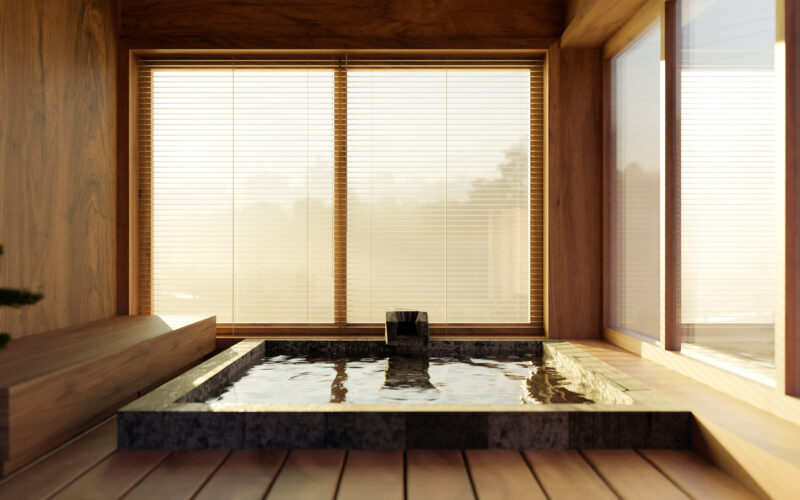
The visual and aesthetic elements of Japanese wellness are widely available. Hinoki wood. Wabi-sabi interiors. Japanese-named treatments. Any operator willing to invest in a designer who understands Japanese aesthetics can access them. These elements produce beautiful spas. They do not produce genuine spa business differentiation — because they are replicable, and many have already been replicated.
What competitors have not replicated — because it cannot be done through a design brief — is the outcome that authentic Japanese wellness delivers when built correctly. That outcome comes from three things working together. A physical environment designed to give the nervous system permission to rest. A sound environment that uses acoustic therapy rather than ambient music. A training program that begins with philosophy rather than technique.
When all three are present, the result is something guests in Singapore, Kuala Lumpur, and major US cities have not experienced before — not even in spas that market themselves as Japanese.
The Barrier to Imitation in Spa Business Differentiation
Here is what makes authentic Japanese wellness particularly attractive as a basis for spa business differentiation: the barrier to imitation is not capital. It is time, depth, and genuine philosophical understanding.
A competitor who wants to replicate a well-executed Japanese wellness concept cannot do so by spending more on their fit-out. They cannot source the same products or hire the same equipment suppliers. They would need to develop, over years, the same depth of philosophical training. Most operators are not willing to invest that deeply in something as intangible as philosophy.
According to McKinsey & Company, competitive advantages rooted in organizational capability — rather than in assets that can be purchased — are significantly harder to displace. In the spa industry, where almost every physical and aesthetic element can be replicated with sufficient capital, a training-based advantage is one of the few things that cannot simply be bought.
A Practical Test for Spa Business Differentiation
Here is a simple test. Ask your most loyal guests why they come back — not why they came the first time, but why they return.
If the answers center on atmosphere, lovely staff, and relaxing treatments — you have built a well-liked spa. That is valuable. It is not irreplaceable.
If the answers include phrases like “I don’t entirely know how to explain it, but my body responds to something here that I haven’t found anywhere else” — you have built something genuinely differentiated.
The gap between those two kinds of answers is the gap that authentic Japanese wellness is built to close. That gap exists in almost every major wellness market right now. For spa owners who want to understand how that kind of differentiation is built in practice, the Okawari partnership framework is the place to start.
Okawari is a Japanese luxury wellness concept developed by CEOL Academy Japan®, Osaka. We build genuine spa business differentiation that creates irreplaceable concepts. Visit okawarispa.com/enquire to begin the conversation.