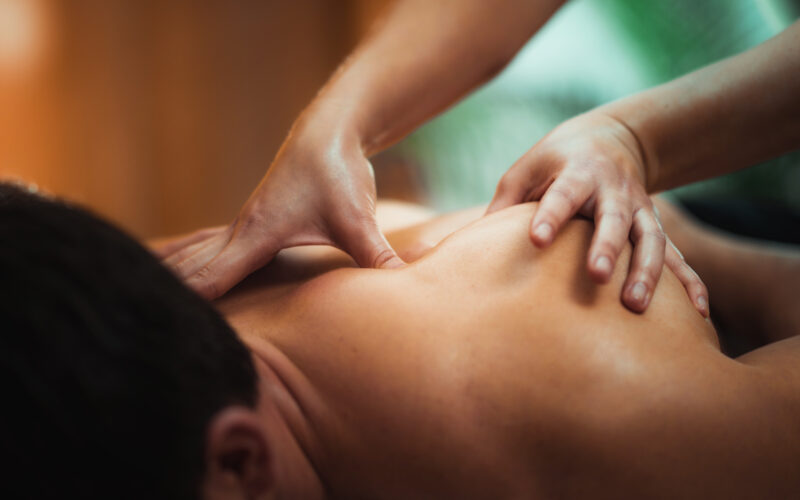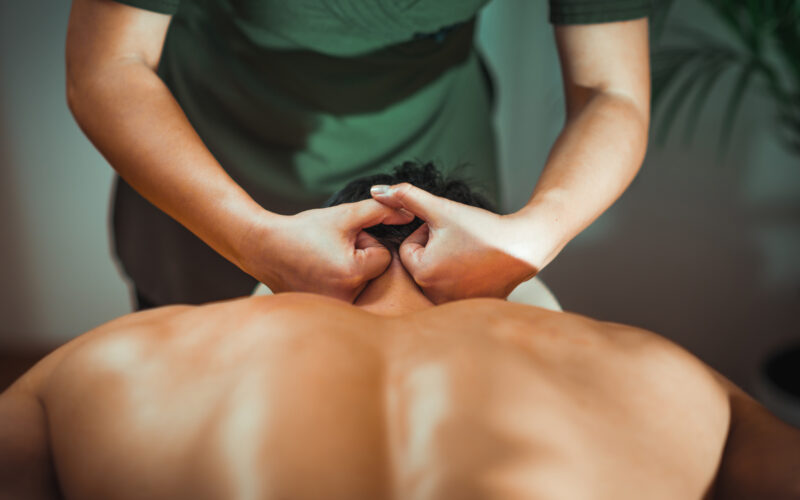
Fascia massage therapy produces some of the most profound and lasting results in hands-on bodywork — when the therapist understands what they are actually working with. Without that understanding, even skilled hands miss what the body is most ready to release.
Fascia is the most underestimated tissue in the human body. For most of medical history, anatomists treated fascia as packaging — the white, fibrous material that holds everything else in place, removed during dissection to expose what they considered more important. That view has changed dramatically over the last two decades.
Researchers now understand fascia as a continuous, body-wide sensory organ with its own nerve supply, fluid dynamics, and capacity to hold and release tension in ways that directly affect how a person moves, breathes, and feels.
For massage therapists, understanding fascia is not supplementary knowledge. It is the foundation on which genuinely effective bodywork is built.
What Fascia Actually Is
Fascia is a three-dimensional web of connective tissue that surrounds, separates, and connects every structure in the body — muscles, bones, organs, nerves, and blood vessels. It exists at every level: surrounding individual muscle fibers, wrapping entire muscle groups, connecting the deep internal structures of the torso to the skin at the surface.
The key characteristic of fascia that makes it relevant to massage therapy is its continuity. Unlike muscle tissue, which has a defined beginning and end, fascia runs continuously through the entire body. A restriction in the fascia of the foot can affect the lower back. Tension held in the fascial tissue around the jaw can contribute to chronic shoulder tightness. Standard anatomical maps separate structures into distinct systems — and in doing so, fail to fully represent how the body is actually connected.
According to research published by the National Institutes of Health, fascia contains a higher density of sensory nerve endings than most other tissues in the body, including muscle. This means that fascia is not simply a structural tissue. It is a sensory tissue — one that actively monitors the body’s internal environment and communicates with the nervous system about tension, compression, and movement.
How Fascia Holds Tension
One of the most important concepts in fascia massage therapy is understanding how fascia accumulates and holds tension over time.
Fascia responds to load and stress by thickening and stiffening. When a muscle repeatedly contracts into a shortened position — as happens in most modern sedentary or repetitive-stress work environments — the surrounding fascia adapts to that shortened state over time. Over months and years, this adaptation becomes structural. The fascia is no longer simply responding to a temporary position. It has reorganized itself around the chronic tension pattern.
This is why stretching alone often produces only temporary relief for chronic tension. The muscle can elongate, but the fascial envelope around it — having adapted to a shortened state — pulls it back once the stretch releases. Genuine fascial release requires a different kind of intervention — sustained, slow pressure that gives the tissue time to respond and reorganize.
Furthermore, fascia responds to emotional and psychological stress as well as physical load. The relationship between chronic stress, cortisol elevation, and fascial thickening is well documented. According to Healthline, the autonomic nervous system’s response to chronic stress produces measurable changes in fascial tissue density — which is one of the reasons that genuine nervous system downshift, produced by authentic Japanese wellness treatment, can release tension that physical manipulation alone cannot fully address.
What Fascia Massage Therapy Actually Does
Effective fascia massage therapy works through several mechanisms, each of which requires a specific quality of touch.
Sustained Pressure and Thixotropy
Fascia has a property called thixotropy — the ability to shift from a more solid, gel-like state to a more fluid, liquid-like state in response to sustained pressure and gentle movement. A practitioner who applies slow, sustained pressure allows the fascial tissue to undergo this shift. The tissue softens. Adhesions — areas where fascial layers have stuck together — begin to release. Movement becomes available that was not available before.
The critical word is sustained. Fascia does not respond to quick or percussive pressure in the same way. It responds to time — to the practitioner holding a contact point and waiting for the tissue to change under their hands. This requires a quality of patience and presence that is closely related to what Japanese wellness training calls kokoro. The practitioner who is genuinely present, without agenda, gives the fascia time to respond. The practitioner who is rushing through a protocol does not.
Hydration and Fluid Dynamics
Fascia is approximately 70 percent water. Its mechanical properties — particularly its ability to glide, slide, and transmit force — depend on adequate hydration of the tissue. Applying fascia massage therapy with appropriate rhythm and pressure moves fluid through the fascial matrix, improving tissue hydration and the gliding capacity of adjacent fascial layers.
This is why the pace of fascia massage therapy matters as much as the pressure. Moving too fast disrupts the fluid dynamics rather than supporting them. The slow, rhythmic pace that characterizes authentic Japanese bodywork is not only culturally traditional — physiology demands it for the tissue being addressed.
Nervous System Communication
Because fascia is so richly innervated, fascial massage therapy produces significant neurological effects alongside its structural ones. Pressure on fascial tissue activates mechanoreceptors — sensory nerve endings that send signals directly to the nervous system. Depending on the quality and pace of the pressure, these signals can activate the parasympathetic nervous system, reduce muscle tone, and lower the overall level of protective bracing the body has been maintaining.
This neurological dimension of fascia massage therapy is why the quality of the practitioner’s touch matters as much as their technique. Confident, unhurried, and genuinely attentive touch activates different neurological pathways than mechanical or rushed contact — even when the same technique applies.
The Areas of the Body Where Fascia Work Is Most Impactful
For therapists developing their fascia massage therapy practice, certain areas of the body offer particularly significant access to the fascial system.
The thoracolumbar fascia — the large diamond-shaped fascial sheet covering the lower back — connects the upper and lower body and contributes to a significant proportion of chronic lower back complaints. Sustained work in this area often produces relief that outlasts the treatment session.
The plantar fascia — the fascial tissue on the sole of the foot — connects through the posterior fascial chain to the calves, hamstrings, and lower back. Releasing tension here can produce changes that a client feels throughout their entire posterior body.
The suboccipital region — the area at the base of the skull — contains fascial connections to the dura mater, the membrane surrounding the brain and spinal cord. Gentle, sustained work in this area is among the most neurologically significant interventions available in hands-on bodywork. Moreover, it is a central element of the Zukyō dry head methodology that forms part of the Okawari treatment protocol.
What This Means for Therapist Development
Understanding fascia massage therapy changes how a therapist approaches their work at a fundamental level. The question is no longer “what technique should I apply to this muscle?” but “what is the fascial pattern I am working with, and what quality of contact will give this tissue the time and conditions it needs to change?”
This understanding also supports the kind of clinical adaptability that separates an excellent therapist from a competent one. A therapist who understands fascia can read a body — can feel through their hands the difference between a tissue that is responding and one that is guarding — and adjust accordingly.
For therapists and spa owners who want to build this depth into their practice, the anatomy-based approach of authentic Japanese wellness places fascial understanding at the center of the training program, not at its periphery.
CEOL Academy Japan® developed Okawari from Osaka — an anatomy-based therapist education institution. We transfer the physiological foundations of effective bodywork, including fascia massage therapy, to international spa partners. Visit okawarispa.com/enquire.