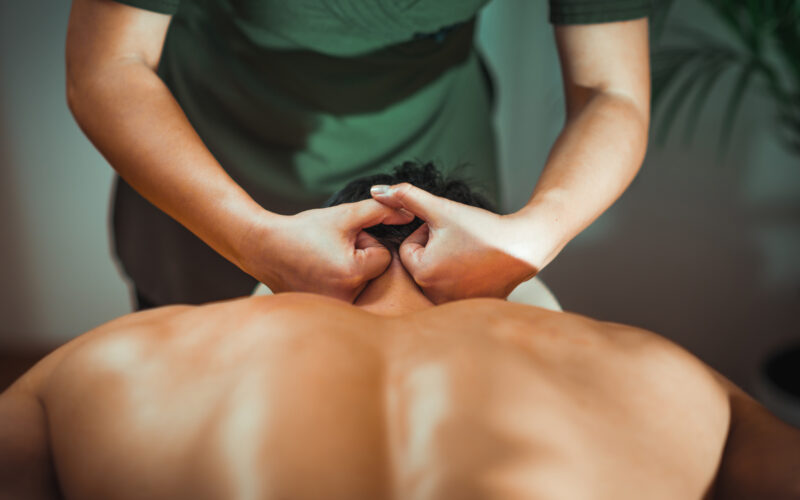
Muscle tension in japanese bodywork is not treated as a problem to be eliminated. It is treated as information — a communication from the body about what it has been holding, for how long, and why.
This distinction shapes everything about how authentic Japanese bodywork approaches the body. Rather than working against tension, the practitioner learns to read it. Rather than applying force to overcome resistance, they develop sensitivity to understand what the resistance is protecting — and what conditions will allow it to release.
This is one of the areas where japanese bodywork diverges most significantly from standard Western massage. It is also where the anatomy foundation of authentic Japanese training becomes most practically visible.
What Muscle Tension Actually Is
To read muscle tension correctly, a therapist must first understand what it represents physiologically.
Muscle tension results from motor neuron activity — electrical signals from the nervous system that cause muscle fibers to contract. In healthy movement, this activity is temporary. The muscle contracts when needed and releases when the demand passes. In chronic tension patterns, however, the nervous system maintains a low-level contraction signal continuously — even when no mechanical demand requires it.
This chronic signal has several sources. Postural adaptation — the body reorganizing itself around patterns of use and disuse — is the most common. Protective bracing is another. This occurs when the nervous system maintains tension around an area of past or current injury as a form of physiological caution. Emotional and psychological stress is a third source. It produces systemic increases in sympathetic tone that manifest as diffuse muscular holding throughout the body.
According to Healthline, chronic muscular tension reduces blood flow to the affected tissue. It also causes accumulation of metabolic waste products and increased sensitivity to pain. Over time, the fascial tissue surrounding chronically tense muscles adapts to the shortened state. This creates a structural component to the tension that persists even when the neural signal temporarily reduces.
How Muscle Tension Is Read in Japanese Bodywork
Authentic japanese bodywork develops a specific quality of sensory attention. The practitioner learns to read what the tissue communicates through touch. This is not simply about identifying which muscles are tight. It is about understanding the quality of the tension, its depth, its relationship to surrounding tissue, and what it is likely to respond to.
Surface Tension Versus Deep Tension
The first distinction a skilled practitioner learns is between surface tension and deep tension. Surface tension — held in the more superficial muscle layers and the fascia immediately beneath the skin — typically responds to relatively light, sustained contact. It reflects recent stress or postural patterns and tends to release without significant intervention.
Deep tension has a different quality. It sits in the deeper muscle layers, in the intrinsic muscles close to the spine and joints. It is often older, more structural, and more guarded. Working directly into deep tension without first addressing the surface layers typically produces protective bracing. The body stiffens in response to what it reads as a threat.
Japanese bodywork approaches deep tension through layers. The surface is addressed first. Trust is established through the quality of contact. Only when the surface tissue has responded and the nervous system has registered safety does the practitioner move toward the deeper layers. By that point, the deeper tension has often already begun to release in response to the nervous system shift.
Protective Tension Versus Adaptive Tension
A second distinction that authentic japanese bodywork develops is between protective tension and adaptive tension. These feel different under the hands and require different responses.
Protective tension is guarded. It has a quality of resistance that increases when the practitioner presses further. The body is protecting something. Working harder into this tension is counterproductive. The appropriate response is to reduce pressure, maintain contact, and wait. Given time and the experience of non-threatening contact, the nervous system will gradually reduce its protective signal.
Adaptive tension is structural. It does not guard in the same way, but it does not release quickly either. This is the tension of a tissue that has reorganized around a chronic pattern. It requires sustained, slow work that gives the fascial component time to respond.
According to the National Institutes of Health, the distinction between these types of tension has direct clinical implications. Attempting to force release of protective tension typically increases it. The nervous system escalates its protective response when it registers forceful pressure as a threat. Authentic Japanese bodywork training develops the sensitivity to recognize this distinction and the patience to respond appropriately.
The Key Muscle Groups in Japanese Bodywork
Understanding which muscle groups most commonly carry chronic tension patterns is essential anatomical knowledge for any practitioner.
The Suboccipital Muscles
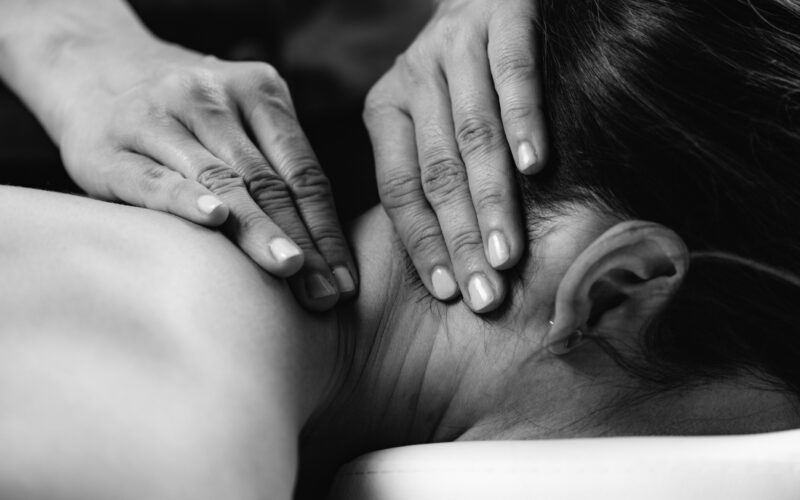
The four small suboccipital muscles at the base of the skull — rectus capitis posterior major and minor, obliquus capitis superior and inferior — are among the most significant tension holders in the body. They contain the highest density of muscle spindles of any muscles in the human body. This makes them exquisitely sensitive to and reflective of nervous system state.
Chronic tension in the suboccipitals is associated with headaches and visual disturbances. It also contributes to the general quality of mental fatigue that most adults experience as normal. Gentle, sustained work in this area forms a central element of the Zukyō dry head protocol in authentic Japanese bodywork. The nervous system effects extend far beyond the local tissue.
The Scalenes and Thoracic Outlet
The scalene muscles run from the cervical vertebrae to the first and second ribs. They form three paired muscles on each side of the neck. Their proximity to the brachial plexus means that chronic tension here can produce referred sensations into the arms and hands.
In Japanese bodywork, the scalenes require particular care because of their direct influence on breathing mechanics. Chronic scalene tension restricts the expansion of the upper chest. This produces a breathing pattern that keeps the nervous system in low-level sympathetic activation. Consequently, releasing scalene tension produces effects on autonomic state — through improved breathing mechanics — that extend beyond the local muscle tissue.
The Thoracolumbar Region
The thoracolumbar region covers the large muscle groups and fascial sheets of the lower back. The erector spinae, quadratus lumborum, and the thoracolumbar fascia all contribute to the chronic lower back discomfort that is among the most common complaints in the adult population.
Japanese bodywork approaches this region through the fascial connections that link it to the rest of the body. Work begins at the feet and progresses through the posterior chain — addressing the plantar fascia, calves, hamstrings, and gluteal tissue before reaching the lower back. This allows the thoracolumbar region to release within the context of the broader postural pattern, rather than in isolation.
Developing the Skill of Reading Tension
The ability to read muscle tension japanese bodywork requires is not primarily a technical skill. It is a perceptual one — and it develops through cultivating genuine sensory attention.
A practitioner who is thinking about what they plan to do next cannot fully receive what the tissue under their hands is communicating. The quality of attention required is present-moment and receptive. The hands function as listening instruments, not as implements of technique.
This quality of attention is related to kokoro. It is one of the reasons that authentic Japanese wellness training develops the practitioner’s internal state as its primary objective. A practitioner who has developed genuine stillness listens differently. Their hands receive what the body is offering. Their work responds to that, rather than to a protocol.
For therapists who want to develop this depth of reading, the Okawari curriculum and the broader picture of authentic Japanese wellness training are worth exploring in full.
CEOL Academy Japan® developed Okawari from Osaka — an anatomy-based institution. We place the understanding of muscle tension japanese bodywork at the center of therapist education, alongside philosophy and nervous system awareness. Visit okawarispa.com/enquire.