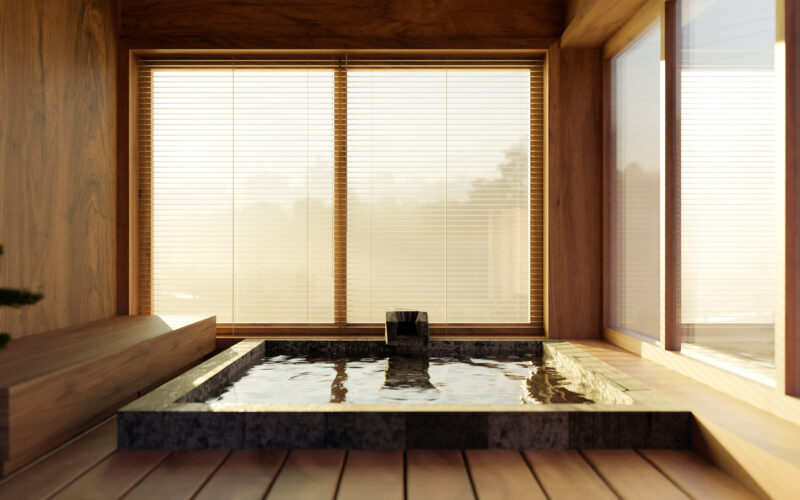
Japanese spa singapore: Singapore is one of the most sophisticated wellness markets in Asia. Guests here have tried everything — Balinese retreats, Korean skincare clinics, Ayurvedic programs, and every variation of “Japanese-inspired” spa concept that has opened in the last decade. They know what good looks like. And more importantly, they know immediately when something is pretending.
Opening a Japanese spa in Singapore is not simply a matter of finding the right location and hiring trained therapists. The market demands more than that. It demands something that guests here have genuinely not experienced before — and that is a much higher bar than most investors realize going in.
This article is not a step-by-step guide to opening a spa. It is an honest look at what the Singapore wellness market actually rewards, what it ignores, and why the concepts that succeed here tend to share one specific quality that has nothing to do with interior design or pricing.
Why Singapore Is Worth Taking Seriously
Let’s start with the numbers, because they matter.
Singapore’s wellness industry has grown steadily even through periods of broader economic uncertainty. The city-state has one of the highest concentrations of high-net-worth individuals in Asia, a culture that genuinely values self-investment, and a consumer base that travels frequently enough to have strong reference points for quality.
According to Statista, Singapore’s health and wellness market is projected to continue its upward trajectory through the late 2020s, driven primarily by demand at the premium end. The guests spending the most are not looking for affordable wellness. They are looking for wellness they have not been able to find elsewhere.
That gap — between what exists and what discerning guests are actually looking for — is where a Japanese spa concept in Singapore sits. And it is a real gap. Despite the number of Japanese-branded spas in the city, very few of them deliver the physiological outcome that authentic Japanese wellness produces. Most deliver the aesthetic.
What the Singapore Market Already Has Too Much Of
Before deciding what to build, it is worth being honest about what already exists in Singapore’s wellness market.
There are dozens of spas marketing themselves as Japanese-inspired. Most of them share the same DNA: hinoki wood, neutral tones, minimalist reception, a menu that includes some version of a Japanese ritual treatment. The photography is almost always beautiful. The experience is almost always competent.
And almost none of them are producing the result that makes guests come back without being asked.
This is not a criticism of the operators. It reflects a structural gap in how Japanese wellness has been transferred internationally. The visual elements of Japanese design travel easily. The philosophical foundation — the part that produces genuine neurological rest — does not transfer through a design brief or a training weekend.
As a result, Singapore has a market full of spas that look Japanese and a significant number of guests who have tried all of them and are still looking for something different. That is the opportunity.
What a Japanese Spa in Singapore Actually Needs to Deliver
The question investors should be asking is not “how do I make my spa look Japanese?” It is “what does my guest feel two days after leaving?”
If the answer is “relaxed, the way I feel after any good spa visit” — the concept has not delivered what authentic Japanese wellness can deliver. If the answer is “different. Something reset. I’m not entirely sure what happened, but I want to go back” — that is the experience worth building toward.
Getting to that second outcome requires three things that most Singapore spa concepts currently lack.
A training program that starts with philosophy. Singapore has excellent therapists. The problem is not skill — it is framework. A therapist who has been trained in Japanese technique without Japanese philosophy will produce a technically competent treatment. What they will not produce is the quality of presence that changes how a nervous system responds to touch. That quality comes from understanding why Japanese wellness works, not just how to execute it.
An acoustic environment that is genuinely designed. Most Singapore spas have background music. Authentic Japanese wellness uses sound as a treatment element — specific frequencies chosen for how they interact with the nervous system, not for how they fill silence. This is a meaningful distinction. The difference in outcome between these two approaches is measurable, and guests feel it even when they cannot name it.
A physical environment that earns rest rather than demands admiration. There is a real difference between a space that makes guests think “this is beautiful” and a space that makes guests stop thinking entirely. The first is a design achievement. The second is a wellness achievement. Singapore guests, at the premium end, are increasingly looking for the second — and finding very few places that deliver it.
The Location Question
Singapore is a compact city, which means location decisions carry more weight than in larger markets. A few observations worth keeping in mind.
The premium wellness market in Singapore concentrates in a handful of areas — Orchard Road, the CBD fringe, Dempsey Hill, and increasingly the newer developments along the waterfront. Each has a different guest profile and a different set of expectations.
However, for a genuine Japanese wellness concept, the location matters less than the experience. Guests who find something they cannot find elsewhere will travel for it. The most loyal wellness communities in Singapore — the ones built around concepts that deliver genuine results — exist in spaces that are not necessarily in the most visible locations.
The guest who visits a Japanese spa in Singapore for the first time because it is conveniently located is a different guest from the one who returns every two weeks because their body responds to nothing else the same way. Build for the second guest, and the first will follow.
What Investors Get Wrong About the Singapore Market
The most common mistake investors make when entering Singapore’s wellness market is treating it like a product launch rather than a relationship business.
Singapore’s premium wellness consumers are sophisticated, well-traveled, and deeply skeptical of concepts that promise more than they deliver. A grand opening with strong PR can fill a calendar for a month. What fills it for five years is a guest who told three people about an experience they could not fully explain.
That kind of word of mouth does not come from good marketing. It comes from a result that guests were not expecting — a treatment that changed how their body felt for days afterward, delivered in a space that gave their nervous system permission to actually stop.
This is what authentic Japanese wellness delivers when it is built correctly. And it is, notably, what the Singapore market is missing at scale.
A Practical Starting Point
For investors seriously considering a Japanese spa concept in Singapore, the starting point is not a lease. It is a training question.
Who is going to deliver the philosophy, not just the technique? Where does the curriculum come from? How does the operating standard get maintained after the opening period ends?
These questions matter more in Singapore than in almost any other market — because the guests who will become your most valuable clients are the ones who will know, within the first 20 minutes of a treatment, whether what you have built is real or decorative.
Getting the answer to those training questions right before signing a lease is the most important investment decision in the process. Everything else — location, interior, pricing — follows from that foundation.
For spa owners and investors who want to understand what a complete Japanese wellness transfer actually looks like, the Okawari partnership program was built specifically for this kind of conversation.
Okawari is a Japanese luxury wellness concept developed by CEOL Academy Japan®, based in Osaka. We work with a select number of international partners each year. To begin the conversation, visit okawarispa.com/enquire.