Something has been shifting in the American spa industry over the last few years, and the operators who are paying attention have noticed it. The most forward-thinking among them are now asking a different question — not “how do I make my spa better?” but “how do I bring authentic japanese spa america-level wellness to my guests?” Loyalty is harder to build. The standard luxury spa formula — beautiful space, skilled therapists, premium products, a menu with something for everyone — is producing diminishing returns in markets where guests have had access to all of it for years.
The most forward-thinking spa owners and wellness investors in the United States have started asking a different question. Not “how do I make my spa better?” but “how do I make my spa genuinely different?” And increasingly, the answer they are finding points toward Japan.
Japanese spa in America is not a new concept. Japanese-aesthetic spas have operated in major US cities for years. But what is new is the seriousness with which American operators are now exploring authentic Japanese wellness — not the look, but the system. The philosophy, the technique, the training model, and the physiological outcome that the real thing produces.
This article explores why that shift is happening now, what it means for the US wellness market, and what American spa owners need to understand before moving in this direction.
What American Wellness Guests Are Actually Looking For
The American wellness consumer in 2026 is not the same as they were ten years ago. A significant portion of the premium wellness market has now cycled through enough spa experiences to have strong opinions about what works and what does not.
These guests have done the hot stone massages, the couples retreats, the CBD-infused everything, the sound baths that felt more like a performance than a treatment. They have tried the Korean spas, the Balinese-influenced concepts, and at least three different interpretations of Japanese-inspired wellness.
What they are looking for — and struggling to find — is something that changes how their body operates, not just how they feel during the treatment. According to Harvard Business Review, the premium consumer in experience-based industries is increasingly moving away from novelty toward depth. They have had enough novel experiences. They want something that actually works.
This is precisely where authentic Japanese wellness has an advantage that no amount of branding can manufacture. When it is delivered correctly, it produces a result that guests describe as different from anything they have experienced before. Not better in a comparative sense — genuinely different in kind. The nervous system responds to it in a way that it does not respond to other modalities.
Why Japan Specifically
Yet the japanese spa america conversation keeps returning to one origin above all others — Japan. The American wellness market has borrowed from many traditions: Ayurveda, Thai massage, Balinese ritual, Chinese medicine — all have found a place in US spa menus. Why is Japan a different conversation?
A few reasons stand out.
First, Japanese wellness has a philosophical foundation that goes beyond technique. Wabi-sabi, ma, kokoro, michi — these are not decorative concepts. They are frameworks for how a practitioner understands their relationship to the person they are treating, to the space they are working in, and to the silence that precedes and follows each movement. That philosophical depth produces a quality of treatment that technique alone cannot replicate.
Second, Japan has a commercial track record. The business model works. Wellness practices with Japanese origins — from precision skincare to body treatment — have demonstrated that premium consumers will pay significantly above market rate for the real thing, consistently, over long periods. This is not a trend. It is a pattern.
Third — and this one matters specifically for the US market — Japanese wellness produces exactly the outcome that burned-out, overstimulated American guests are looking for. The Mayo Clinic has documented the physiological effects of treatments that activate the parasympathetic nervous system. Japanese wellness, designed around sound, silence, and skilled touch, does this systematically. It is, in a very real sense, what the American wellness consumer needs — even when they do not have the language to ask for it.
What Japanese-Inspired Gets Wrong in the Japanese Spa America Market
Here is the part that most American spa operators need to hear directly: most Japanese-inspired spa concepts in the US are not delivering what they are promising.
The aesthetics are usually good. The treatments are usually competent. The guest experience is usually pleasant. But the physiological outcome — the thing that makes a guest come back two weeks later because their body needs it — is usually not there.
The reason is training. Or rather, the lack of it at the level that matters.
Most US spa operators who add Japanese treatments to their menu do so through a workshop, a certification program, or a technique manual. The therapist learns the movements. They do not learn the philosophy behind the movements. And without that philosophical foundation, the treatment is technically Japanese in form but not in outcome.
This is not a subtle distinction. Guests at the premium level feel it. They may not be able to articulate exactly what is missing, but their body registers the difference — and their booking behavior reflects it.
The Opportunity for American Spa Owners
The gap between what is currently offered in the US market as Japanese wellness and what authentic Japanese wellness can deliver is, in practical terms, a significant business opportunity.
Premium wellness consumers in major US markets — New York, Los Angeles, Miami, Chicago, and increasingly cities like Nashville, Denver, and Austin where the premium wellness market has grown rapidly — are actively looking for something that genuinely differentiates. They are willing to pay for it. They will be loyal to it if they find it.
Building it requires a few things that are not standard in US spa development.
A training partnership with genuine depth. The curriculum needs to transfer philosophy, not just technique. This means working with a partner who has spent years in practice, not years in curriculum design.
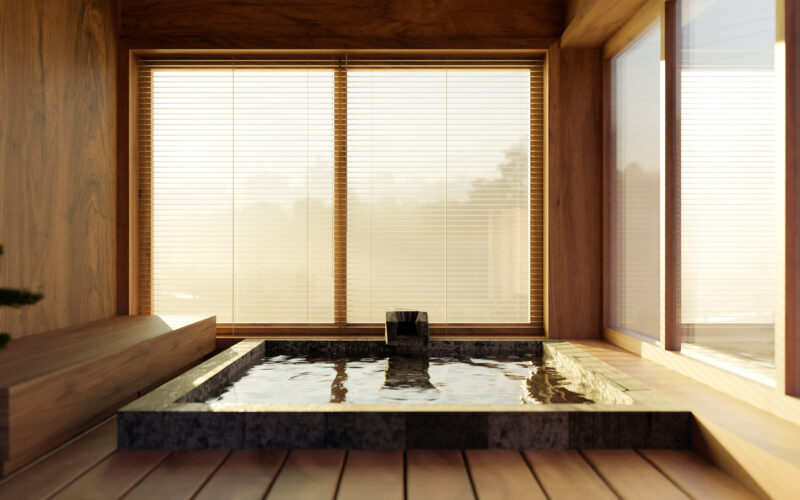
A physical environment built around the principles, not the aesthetic. A Japanese spa in America does not need to look like a recreation of a Kyoto retreat house. It needs to create the conditions — through material, light, sound, and proportion — that give the nervous system permission to rest. That is a design brief, not a mood board.
Patience with the build phase. Authentic Japanese wellness is not a concept that can be deployed in three months. The training alone, done properly, takes time. Operators who rush this phase produce the kind of Japanese-inspired concept that already exists in abundance in the US market. Operators who invest the time produce something that does not exist anywhere near their location.
What This Looks Like as a Business Decision
For spa owners evaluating whether a Japanese wellness direction makes sense for their business, the financial case is straightforward — provided the execution is genuine.
Premium pricing at 40 to 60 percent above comparable treatments is consistently achievable for authentic Japanese wellness in US markets. Guest retention in properly delivered Japanese wellness concepts significantly outperforms industry averages. And the referral rate — guests who bring friends and family because they genuinely cannot explain the experience any other way — is one of the highest in the wellness industry.
These numbers are not projections. They are what happens when the system is built correctly. According to Forbes, the luxury wellness segment in the US has consistently outperformed broader wellness market growth, driven primarily by consumer demand for experiences that deliver measurable outcomes rather than pleasant afternoons.
The investment is real. The training commitment is real. And the return, for operators who make both, is the kind of business that becomes genuinely irreplaceable in its market.
A Direct Question for US Spa Owners
If you operate a spa in the United States and you are reading this, here is the question worth sitting with: what does your most loyal guest say when they recommend you to someone else?
If the answer is “it’s really relaxing and the staff are lovely” — that is a competent spa. It is not an irreplaceable one.
If the answer is “I can’t fully explain it, but something about what they do is different. Just go” — that is what authentic Japanese wellness builds. And it is a conversation that more American spa owners are starting to take seriously.
For those who want to understand what that kind of concept looks like in practice, the Okawari partnership program was built for exactly this market. The full picture of what distinguishes authentic Japanese wellness from its imitations is worth understanding before any further decisions are made.
Okawari is a Japanese luxury wellness concept developed over fourteen years by CEOL Academy Japan®, Osaka. We work with a select number of international partners each year. Partnership enquiries: okawarispa.com/enquire.